Answer Engine Optimization: How Businesses Can Get Seen in ChatGPT and Google AI Overviews
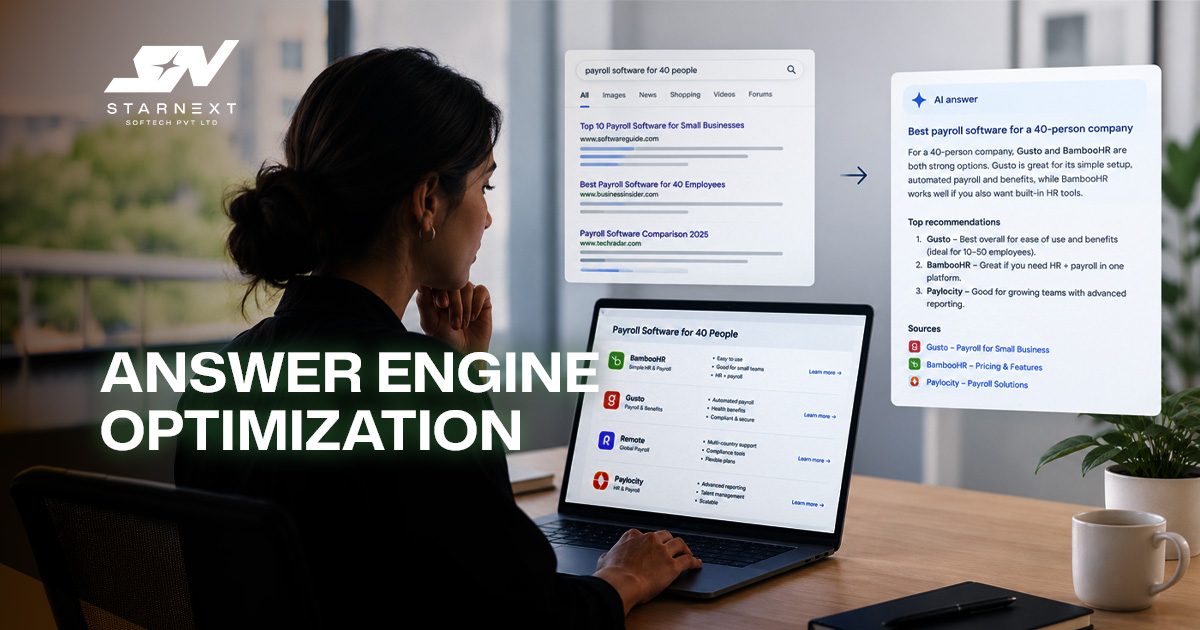
A prospect no longer has to search " payroll software " , open ten tabs and compare feature pages alone. They can ask ChatGPT to compare options for a 40‑person company or ask Google how to choose a provider for an industry. The answer may name brands, explain trade‑offs and link to a source before the searcher ever reaches a normal results page.
That shift changes the visibility problem. A first‑page ranking still matters. A business also needs to be understood well enough to appear in a generated answer. Answer Engine Optimization is the practice of improving that chance: not by trying to trick a language model but by publishing information that search and AI systems can crawl, verify, retrieve and use with confidence.
Google says its AI features do not need a set of "AI SEO" tactics. Pages should stay technically ready for Google Search. Provide helpful, reliable, people‑first content. The chance is to carry out those fundamentals with precision.
AEO, SEO and GEO Solve Related Problems
The terminology is still evolving. Some groups use AEO as an umbrella term, while others distinguish it from generative engine optimization and tools like Google Search Generative Experience. The names people use are less important than the business results. What matters is making the brand visible when people search for specific information.
| DISCIPLINE | PRIMARY GOAL | WHAT SUCCESS LOOKS LIKE |
|---|---|---|
| SEO | Earn qualified organic visibility and visits | A relevant page ranks, receives clicks. Converts |
| AEO | Supply a clear trustworthy answer to a specific question | A page or brand is surfaced in answer‑oriented results |
| GEO | Improve a brand's presence in AI‑generated synthesis | An assistant mentions, describes or cites the business accurately |
An answer search engine does not work like a results page. It may split a prompt into several sub‑questions retrieve sources for each then synthesize a response. That means a sprawling "everything about our service" page can be less useful than a well‑organized page that answers one customer decision clearly.
For example a cybersecurity consultancy should not publish a general services page. It should also answer questions buyers truly ask: "What does a ransomware readiness assessment include?" "How does ISO 27001 preparation take?". What should a healthcare clinic check before hiring an MSP?" Each page gives the company a chance to be relevant at a moment of need.
AI Search Rewards Evidence, Not Content Volume
The weak version of Answer Engine Optimization is producing hundreds of FAQs written around prompts. That approach creates repetition, thin pages and little reason for an answer system to trust the material.
The stronger version starts with a question: what fact, process, experience or judgment can this business explain better than a generic publisher? Replace statements with material a buyer could act on.
- A logistics provider can show a decision framework for picking regional, versus fulfillment including delivery cut‑off considerations.
- A dental practice can explain treatment eligibility, aftercare, pricing variables and when a consultation is necessary.
- A B2B software company can publish implementation timelines, integration limits, screenshots and role‑specific workflows of repeating B2B software company feature lists.
- A local accountant can describe the documents needed for a filing scenario and make clear where personal advice is required.
Build Pages Around Decisions Not Just Topics
A topic such as "HR software" is too broad to guide editorial work. A decision is more concrete: "Which HR software features matter for a distributed company with employees?" This decision implies comparison criteria, constraints, buyer roles and a next step.
For each priority service or product map content to four question types:
- 1. Definition questions: What is it, who is it for and what problem does it solve?
- 2. Evaluation questions: What are the options, limitations, costs, risks and selection criteria?
- 3. Implementation questions: What happens after purchase and what preparation is needed?
- 4. Proof questions: What evidence demonstrates experience, results, safety, quality or fit?
Make Your Business Easy to Identify and Verify
AI systems need more than an article. They need context about the entity behind it: who B2B software company is, what B2B software company offers, where B2B software company operates, who is responsible for the content and why B2B software company claims should be trusted.
- Keep the business name, location, service areas, contact details, product information and key brand descriptions consistent across the website and major third‑party profiles.
- Publish substantive About, Contact, author, leadership and editorial‑policy pages where they are relevant to the business.
- Attribute expert content to people. Explain their credentials or first‑hand experience.
- Cite primary sources, standards, research, regulations or original data when making claims.
- Earn credible mentions through research, partnerships, specialist commentary, customer stories and industry participation not paid link schemes.
Structured data belongs in this work. It should not be treated as a ranking spell. It can help search engines understand page content and can support eligibility for search appearances; it is not a generic ranking factor on its own. Use Organization, LocalBusiness, Product, Article and other relevant markup to clarify information already visible to users.
Write Content That Can Be Quoted Without Losing Meaning
An AI assistant may use a portion of a page. Every important section should therefore stand on its own.
Open a section with an answer then add the reasoning, boundaries and example. Use headings rather than clever ones. Define terms at first use. Keep comparison criteria explicit.
"For service businesses the best first AEO investment is improving existing high‑intent pages not launching a large FAQ library. Pages already receiving impressions have proven relevance; adding clearer answers, evidence and decision‑making detail can make them more useful in both search and AI responses."
This paragraph states a recommendation explains the logic and limits the claim to an audience. It is easier to assess than "Optimize your content for AI."
Do Not Confuse Concision With Thin Content
Direct answers matter but so do qualifications. A financial adviser cannot responsibly answer a retirement‑planning question with one sentence. A medical clinic should not present educational content as a diagnosis. The goal is retrieval plus enough context to be accurate.
Use tables for comparisons ordered steps for processes and visuals where they clarify a product or process. Avoid turning every page into a string of snippets. Readers still need an argument.
Technical Access Is a Prerequisite, Not an Advantage
A strong article cannot be cited by a system that cannot access it. Audit indexability, canonical tags, internal linking, page rendering, XML sitemaps and robots directives before investing in AI‑search content. A well-planned website needs strong Technical SEO to help search engines and AI-powered tools access and understand its content
For ChatGPT search OpenAI states that OAI‑SearchBot is used to discover and surface websites in its search features. Websites that block it are not shown in ChatGPT search answers though navigational links may still appear. This crawler is separate from GPTBot, which relates to model‑training use; a business can make separate policy decisions rather than assuming one setting covers both.
- Confirm public pages you want discoverable are not blocked in robots.txt, robots tags, CDN bot controls or firewall rules.
- Allow crawler requests to pass through the hosting and security stack.
- Make core information appear as HTML instead of being hidden only in scripts, images or downloadable brochures.
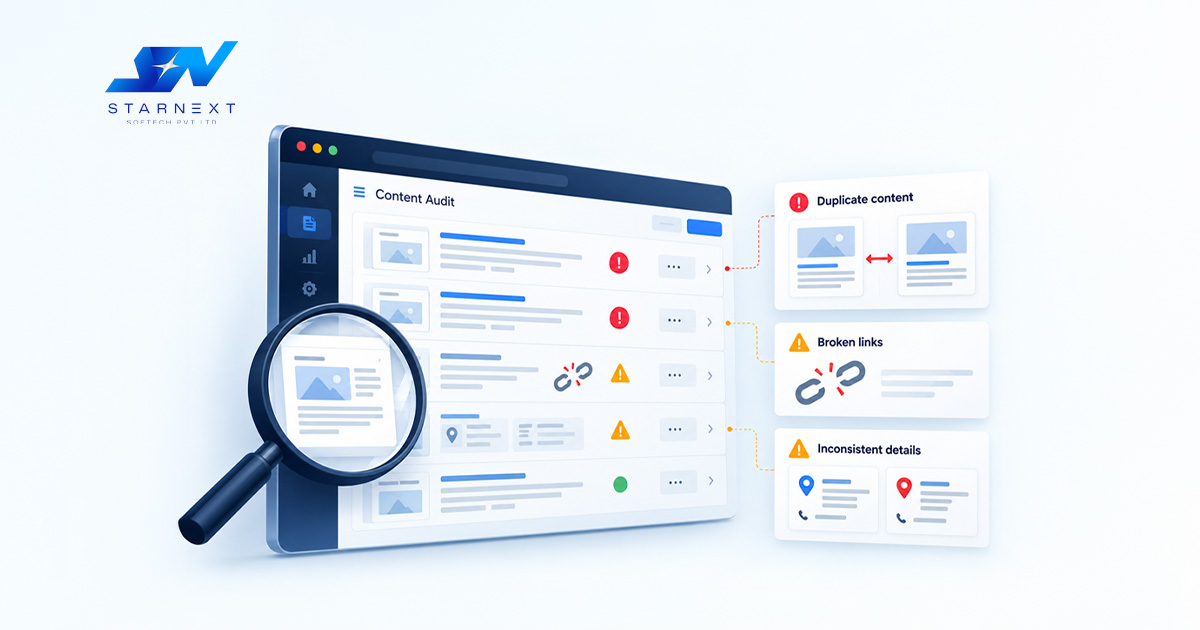
- Fix pages that are duplicate, outdated or conflicting so that it is clear which version represents the business.
- Use links to connect pillar pages comparison content, product pages case studies and expert resources.
Measure Influence Beyond Rankings and Clicks
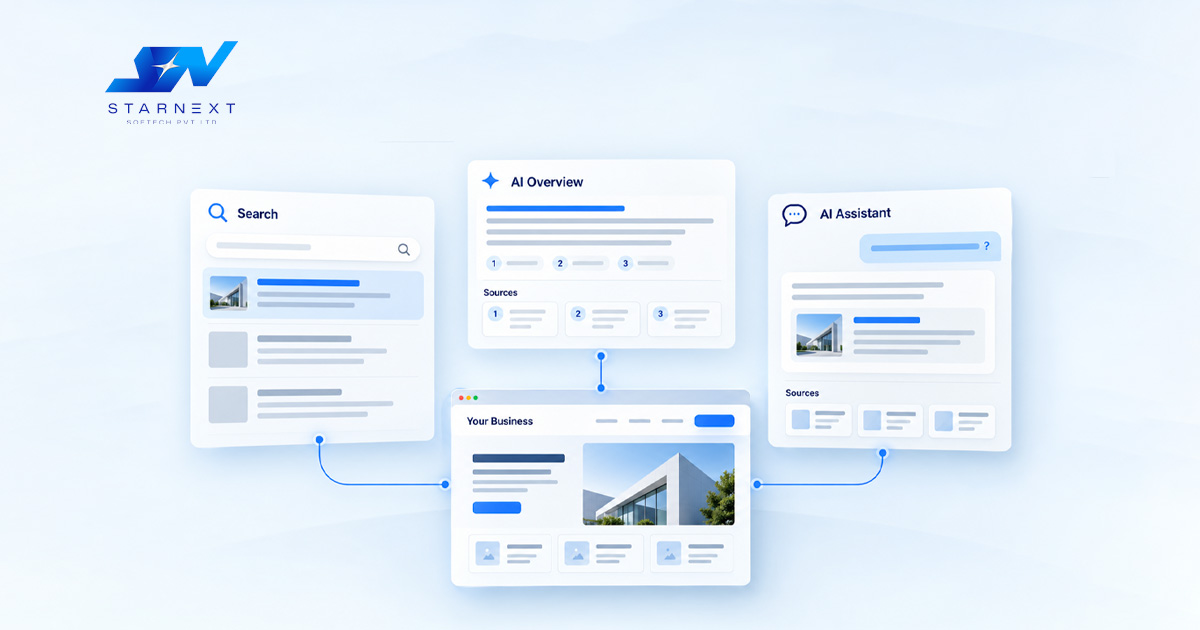
AI results can reduce the number of clicks a user needs to get an answer yet that does not mean the traffic that remains is worthless. A visitor who clicks after seeing a business cited in a comparison may be much closer to a decision.
- Track organic impressions, rankings, click‑through rate, engagement, qualified leads and assisted conversions for priority pages.
- Test a fixed set of high‑value prompts across Google AI features, ChatGPT and other relevant assistants. Record whether the brand is cited, mentioned, omitted or described inaccurately.
- Review referral analytics. ChatGPT search referrals can be identified in analytics using the chatgpt.com source parameter.
- Monitor branded search demand, review language, sales‑call questions and competitor comparisons. These reveal whether your business is entering the buyer's consideration set.
The Most Common AEO Mistakes
- Publishing AI‑written pages without expertise does not create evidence, customer insight or earned trust.
- Chasing schema markup as a shortcut does not compensate for claims or shallow pages even though markup can clarify content.
- Writing for informational queries does not help buyers who also need help comparing options assessing fit understanding price drivers and reducing implementation risk.
- Ignoring brand consistency makes verification harder because conflicting locations, product names, unclear positioning and stale biographies confuse readers.
- Treating citations as the only outcome ignores that a cited source can support awareness. The destination page still has to earn enquiries, demo requests, bookings or purchases.
The Business Case for Being a Better Source
The future of search will not reward businesses for mentioning the right terms more often. It will favor sources that reduce uncertainty: pages that make a complex choice, clearer entities that're easy to verify and brands with evidence behind their claims.
Treat Answer Engine Optimization as a quality standard, not a trick. Build pages that a prospective customer would trust a sales team would. An assistant could summarize without distorting the point. That is the durable route to visibility, in Google AI Overviews, ChatGPT and whatever form search takes next.