The Importance of Local SEO: How to Dominate Your Local Market
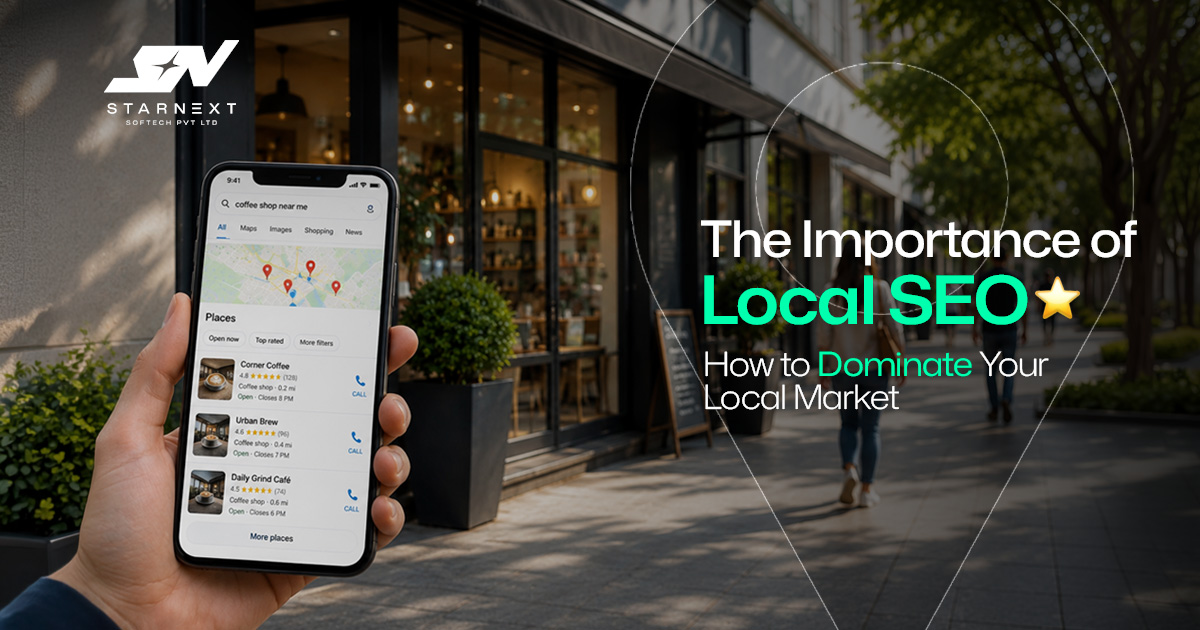
Consider the following scenario: a person a couple of blocks from your business whips out their phone, goes to Google, and searches for “best coffee shop near me” or “emergency plumber in town.” Within two seconds, Google hands them a neat map showcasing three nearby options.
If your business isn't one of those three, you didn't just miss a website click - you basically handed a paying customer directly to your competitor down the street.
That’s modern commerce in a nutshell. Nearly half of all Google searches have local intent, and a staggering 76% of people who run a local search on their smartphone visit a physical business within 24 hours.
If you’ve been relying strictly on word-of-mouth or dumping money into generic digital ads, it’s time for a pivot. Local search engine optimization (Local SEO) isn't just a fancy extra; it is the single most effective engine for driving walk-in traffic, phone calls, and actual revenue to your business.
Let’s talk about why local SEO matters so much, how Google decides who wins that top spot, and the exact steps you can take to dominate your local market.
Trying to hire different freelancers for each of these pieces is a management headache. With a full-service agency like StarNext Softech, all aspects of your digital strategy are aligned, cohesive, and managed by one accountable team.
What Is Local SEO, Really?
Marketing shouldn’t be like throwing darts at a wall in the dark and hoping something sticks. One of the best things about modern digital marketing is that virtually everything can be tracked, measured, and analyzed in real time. Professional agencies don’t base it on gut feeling; they use solid analysis to track: Where your website visitors are coming from.
Traditional SEO is all about making your website visible across the country or around the world. If you run an online software company, you want anyone typing 'best accounting software' to find you, whether they're in Seattle or Miami.
Local SEO is hyper-targeted. It focuses on tuning up your digital footprint so your business pops up when nearby customers search for what you do.
When someone searches for a service with a location attached (like 'dentist in Chicago') or uses a 'near me' query, Google’s algorithms switch gears. Instead of showing a wall of national websites, it triggers the Google Map Pack (or the Local 3-Pack)—that featured map box highlighting three top-rated local businesses right at the top of the page.
Getting into that Map Pack is the absolute sweet spot. Those three listings capture nearly half of all clicks on local search queries, completely outperforming normal web links.
Why Local SEO Matters More Than Ever
Consumer habits have shifted permanently. People don't thumb through bulky yellow phone books or wait for mailers; they tap a screen to find quick answers, compare star ratings, check operating hours, and hit 'get directions.'
Here is why putting your effort into local SEO pays off so well:
1. Local Buyers Are Ready to Spend
When someone types in 'car repair shop open now' or 'bakery near me' they are not just looking around for the hell of it. They have a problem and a wallet to solve it right now. Being visible to these high-intent searchers means being in front of people at the exact moment they are ready to buy.
2. High Rankings Equal High Traffic
Learning digital marketing is about trial and error, and that takes months (sometimes years) of expensive mistakes. An established agency has years of hands-on experience across multiple sectors. They already know which ad formats convert best, which keywords bring in real leads, and how to set up sales funnels that convert. No more wasting your time testing out the basics. You jump right into proven time-tested playbooks designed to accelerate your growth safely.
3. Building a Brand People Notice and Trust
When your business lands on page one for local searches, the domino effect is instant. You get more web visits, more phone inquiries, more foot traffic, and ultimately higher sales - all without paying for every single click.
4. Sustainable Return on Investment
Traditional ads like billboards, mailers, or local radio spots stop working the second you stop paying for them. Local SEO works like an asset. Once you build up your rankings, accurate listings, and review count, your online presence keeps pulling in qualified leads around the clock.
How Google Decides Who Wins: The 3 Pillars
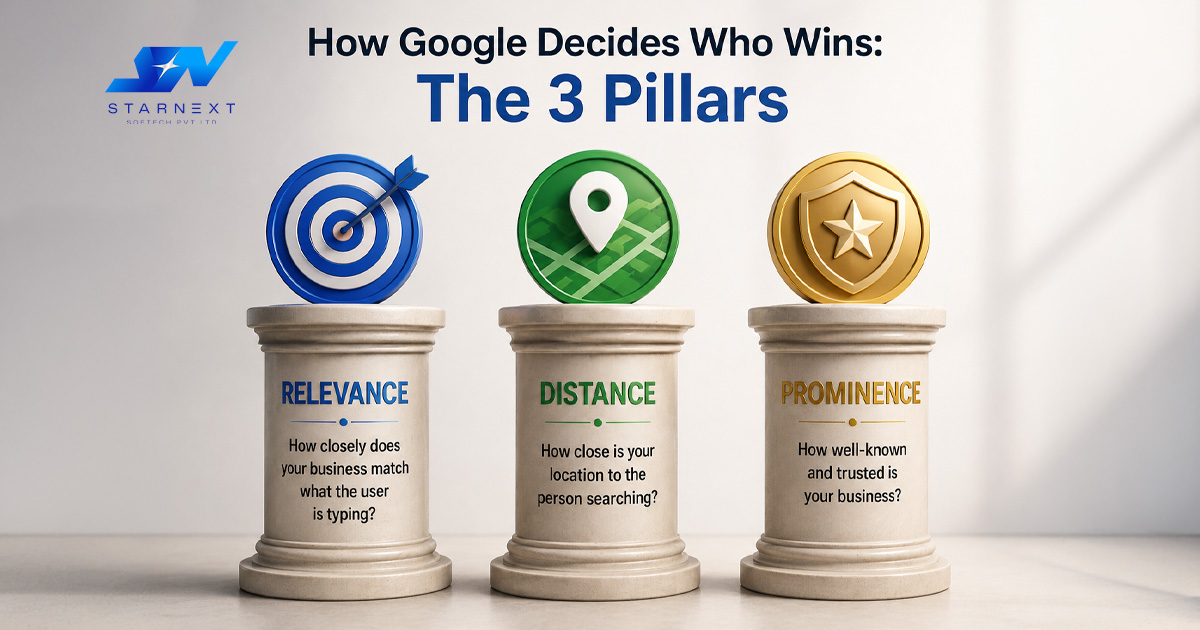
To beat your local competitors, you need to know what Google is looking for when it builds those local search results. It boils down to three simple factors:
- Relevance: How closely does your business match what the user is typing? If someone searches 'vegan bakery', Google looks at your business categories, descriptions, and content to make sure you actually fit the bill.
- Distance(Proximity): How close is your physical location to the person searching or to the specific neighborhood they typed in?
- Prominence: How well-known and trusted is your business? Google measures this using your star ratings, total review count, mentions across the web, and links pointing to your site.
The Step-by-Step Playbook to Own Your Market
Dominating your local market doesn't happen by accident, but following a steady strategy will put you miles ahead of the competitors down the road who are still taking shortcuts.
Step 1: Optimize Your Google Business Profile
Your Google Business Profile (GBP) is the absolute heart of your local SEO efforts. It's free, simple to set up, and feeds directly into Google Maps.
- Pick the right primary category: This is huge. Be as specific as possible (e.g., pick 'Italian Restaurant' instead of just 'Restaurant').
- Fill out every details field: Include your exact business name, phone number, address, website link, and hours.
- Add real photos: Upload high-resolution photos of your store, your team, and your work. Profiles with real photos get significantly more clicks than those without
- Post updates: Treat your profile like a lightweight social feed. Share updates, holiday hours, and special offers to signal to Google that you're active.
Step 2: Keep Your Details Consistent Everywhere (NAP)
NAP stands for Name, Address, and Phone Number. Search engines scan hundreds of directory sites across the web (like Yelp, Facebook, Apple Maps, and local directory pages) to check if your business information matches up.
If your website lists your business address as “100 Main Street, Suite B” and Yelp lists it as “100 Main St #B” search engines get confused. Inconsistencies lead to hesitation, and hesitation costs your ranking. Make sure your business information is exactly the same on each platform.
Step 3: Target Local Keywords
Keyword research is not just for the big corporations. Rather than trying to rank for broad, ultra-competitive terms such as “dentist” or “plumber,” put the bulk of your focus on location-specific terms such as “family dentist in Dallas” or “emergency plumber in Austin.”
Use these local keywords naturally in your page titles, headers and website copy, so Google knows exactly what area you serve.
Step 4: Build a Reviews Engine
Reviews are a major trust signal for both potential customers and search engine algorithms.
- Ask naturally: Make it a habit to request reviews from happy customers via email, text, or right at checkout.
- Keywords in reviews help: When customers mention specific products or services in their comments (e.g., 'Best deep tissue massage in town!'), it signals relevance to search engines.
- Reply to everyone: Take the time to respond to all reviews - both positive and negative. It shows prospective buyers that you care about customer experience.
Step 5: Score Hyper-Local Backlinks
National brands chase links from big media, while local businesses win by earning links in their own backyard. Sponsor a local youth sports team. Partner with neighboring businesses. Join your local Chamber of Commerce. Get featured in regional blogs. These local connections build massive geographic authority.
Local SEO Checklist
| Core Strategy | Action Item |
|---|---|
| Google Business Profile | Claim your profile, pick a specific primary category, and upload fresh photos. |
| Directory Consistency | Audit your Name, Address, and Phone number (NAP) across all online listings. |
| On-Page Optimization | Add location-based keywords to your website headers and titles. |
| Review Strategy | Systematically invite satisfied clients to leave feedback on Google. |
| Local Links | Partner with local organizations, events, or local business chambers. |
Common Local SEO Mistakes to Dodge

Even seasoned business owners drop the ball on a few easily fixable details. Keep an eye out for these frequent mistakes:
- Leaving your Google profile half-finished or abandoning it once created.
- Forgetting to update holiday hours, leading to unhappy customers showing up to locked doors.
- Ignoring negative reviews instead of addressing them professionally.
- Overpacking your website text with repeated location names until it sounds robotic
Also Read: Common Digital Marketing Mistakes That Are Costing You Money
Leveling the Playing Field
The best thing about local SEO? It levels the playing field. You don't need a multi-million-dollar marketing budget to outrank a giant national chain. Google’s primary goal is simply to show users the most relevant, nearby answer.
A local business that is well-optimized, with good reviews, accurate information, and active links to the community, can easily beat the generic branch office of a huge corporation.
When you own your Google profile, collect great customer reviews, and keep your information consistent, you create a strong marketing pipeline that will keep your business busy for years to come.