Top 5 Social Media Platforms Your Business Should Focus on in 2026
If there is one lesson business owners have learned the hard way over the last few years, it is this: being everywhere on the internet is not the same thing as being effective. You can set up a profile on every shiny new app, churn out posts seven days a week, and still find yourself staring at zero conversions. It is exhausting, and worse, it rarely moves the needle. The reality is that every social channel operates like a completely different neighborhood. The people are different, the unspoken rules of etiquette are different, and the content they expect to consume varies wildly. As we move through 2026, those differences matter more than ever. Short-form video still eats up the lion's share of screen time, but social media has also fully transformed into the modern search engine.
People do not just scroll when they are bored; they use these apps to discover new brands, research product reviews, compare options, and buy directly without ever opening a separate web browser. Trying to master every single channel is a fast track to burnout. The real strategy lies in picking the platforms that match your business goals and ignoring the rest. If you want to cut through the noise this year, here are the top five social media platforms your business should actually focus on and how to make each one work for you.
1. Instagram: The Undisputed King of Visual Storytelling
If your business relies heavily on aesthetics, lifestyle appeal, or instant visual proof, Instagram is a must. Instagram has evolved from a simple photo-sharing app into a multi-format ecosystem. Between Reels, interactive stories, multi-slide carousels, and integrated shopping features, it gives brands a canvas to market themselves without feeling like a pushy late-night infomercial.
It is an obvious fit for B2C niches like fashion, food, travel, beauty, real estate, and fitness. However, dismissing it as a B2B brand is a mistake. Company decision-makers are human beings who spend time scrolling on their phones like everyone else. Instagram can be a unique way for B2B companies to show off their culture and their processes and put a face on the people behind the logo. The thing about Instagram in 2026 is that it has this perfect mix of discovery and retention. Its algorithms serve short-form Reels to new audiences, and Stories and DMs help you to develop relationships with those who are already following you.
What to Post
- Short, engaging Reels that teach or entertain
- Carousels that break down complex topics step-by-step
- Unfiltered, behind-the-scenes glimpses of your team
- Direct customer testimonials and before-and-after transformations
- Interactive stories featuring polls, Q&A stickers, and links
Best for: Visual brand identity, community engagement, direct consumer sales, and social commerce.
2. YouTube: The Long-Term Authority Builder
Think of Instagram as the place where people first discover your brand, and YouTube as the place where they fall in love with it. Social media feeds move fast. A post on X or Facebook often dies within hours; an Instagram Reel might last a few days. YouTube operates on a completely different timeline. Because it is the world’s second-largest search engine, a well-crafted YouTube video can pull in organic traffic, generate leads, and build trust for months, sometimes years, after you hit publish. That long-term shelf life changes the entire return on your marketing investment. YouTube is ideal for businesses that solve problems through education.
Software platforms explaining complex workflows, financial advisors answering tax questions, contractors demonstrating home repairs, or agencies breaking down market strategy all thrive here. You do not need a Hollywood-level production crew to succeed. Clear audio, good lighting, and useful information will take you further than fancy editing. Plus, with YouTube Shorts built directly into the ecosystem, you can capture quick scrolling attention while using your primary channel to build deep brand authority.
What to Post
- Detailed 'how-to' tutorials and walkthroughs
- In-depth product demonstrations and comparisons
- Case studies and real-world client stories
- Expert interviews and deep-dive industry breakdowns
- YouTube Shorts capturing key takeaways from longer videos
Best for: Search engine visibility, building long-term trust, lead generation, and evergreen educational content.
3. TikTok: The Ultimate Organic Discovery Engine
TikTok is no longer just an app where teenagers dance to viral routines. It has become one of the most powerful brand discovery tools on the web. What makes TikTok so disruptive for businesses is its interest-based algorithm. Traditional networks limit your reach by your number of followers. TikTok’s algorithm serves up content based on a person’s preferences, not who they follow. That means a business with ten followers can post a compelling video today and by tomorrow morning reach half a million targeted viewers.
It levels the playing field for small businesses with limited budgets to compete directly with legacy corporations.” The biggest mistake brands make on TikTok is treating it like a TV commercial channel. There’s no production value. There’s just authenticity. Audiences are swiping past over-produced, corporate-sounding ads. What works is real, real conversation and real practicality. A business tip shot on an iPhone, an authentic customer reaction, or a behind-the-scenes glimpse of the business.
What to Post
- Bite-sized tips that answer specific customer problems
- Casual, unscripted product demos
- Relatable industry humor and trend adaptations
- 'A day in the life of a founder' video logs
- Myth-busting content within your industry niche
Best for: Rapid audience reach, brand discovery, connecting with younger demographics, and organic viral growth.
4. LinkedIn: The B2B Engine and Thought Leadership Hub
If you sell to other businesses, offer professional services, or manage high-ticket sales cycles, LinkedIn is where your energy belongs. In 2026, generic corporate press releases on LinkedIn are officially dead. Instead of dry corporate announcements, it’s become more of a personal, human perspective. Buyers don’t want to negotiate with faceless corporations; they want to deal with experts, founders, and leaders who know their craft inside out. This change makes LinkedIn the ideal launchpad for founder-led marketing and executive thought leadership. Your CEO, lead sales team, or subject-matter experts sharing their real-world experience, lessons learned, and honest opinions builds a level of trust that traditional advertising simply cannot buy. With the internet full of low-effort AI-generated fluff, sharing real, experience-based insights on LinkedIn makes you stand out more than ever.
What to Post
- Unfiltered stories about business wins, failures, and lessons
- Data-backed industry analysis and original research
- Detailed breakdowns of client case studies
- Practical, step-by-step business advice
- Short, direct commentary on breaking industry news
Best for: B2B lead generation, executive networking, industry authority, corporate recruitment, and high-value sales.
5. Facebook: The Workhorse for Local Reach and Community
It might not be as cool as TikTok or as polished as Instagram, but if you ignore Facebook in 2026, you’re ignoring a huge audience. In terms of sheer user volume, Facebook is still king of the hill. More importantly, its user demographic has matured. It is the go-to platform for targeting middle-aged and older demographics with disposable income, an audience many digital marketers accidentally ignore. Facebook is a goldmine for local brick-and-mortar businesses, home service providers, community organizations, and retailers. Between Facebook Groups, event pages, localized business tools, and a hyper-targeted advertising network, it offers tools for localized engagement that other platforms struggle to match. The trick to winning on Facebook today is combining organic community interaction with smart, targeted paid campaigns.
What to Post
- Community updates, event invitations, and local news
- Highlights of local customers and community members
- Direct promotions, seasonal offers, and store updates
- Discussion prompts inside branded Facebook groups
- Educational video posts and Reels mirrored from Instagram
Best for: Local business marketing, community building, hyper-targeted advertising, and broad demographic reach.
How to Choose the Right Strategy for Your Business
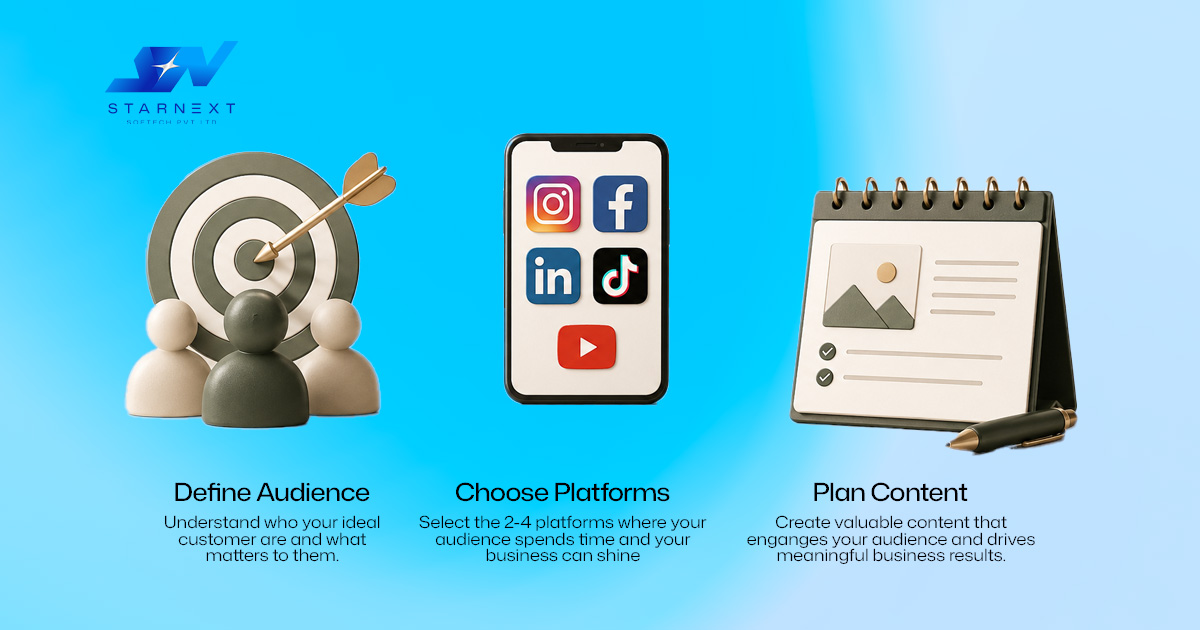
Here is the plain truth: you do not need to be active on all five platforms.
Trying to manage five different social media strategies simultaneously usually results in low-quality content spread far too thin. A far smarter play is to pick two maybe or three platforms where your ideal customers already spend their time and focus on doing those exceptionally well.
Here are a few quick framework examples:
- For a Direct-to-Consumer (B2C) E-Commerce Brand: Focus on Instagram (for visual branding and social shop sales) and TikTok (for product discovery and trends).
- For a Business-to-Business (B2B) Software Company: Focus on LinkedIn (for decision-maker outreach) and YouTube (for product tutorials and trust-building).
- For a Local Service Business (e.g., Plumbing, Real Estate, Local Bakery): Focus on Facebook (for local community groups and ads) and Instagram (for local visual proof).
- For an Independent Consultant or Coach: Focus on LinkedIn (for professional authority) and YouTube (for deep-dive educational content).
The ultimate goal of your social media effort should never be collecting vanity follower counts. The real goal is to build a predictable, repeatable system that turns stranger attention into meaningful business outcomes, whether that means email subscribers, website visits, scheduled sales calls, or direct purchases.
Focus on Being Human
The most successful social media platforms for business in 2026 are not defined by hype or new feature releases. They are defined by where your actual customers pay attention and where you can consistently deliver value.
- Instagram builds visual culture and immediate desire
- YouTube secures long-term search visibility and authority.
- TikTok generates rapid organic discovery
- LinkedIn converts professional trust into high-value deals for B2B businesses.
- Facebook anchors local communities and drives hyper-targeted ads.
Ask agencies what their reporting looks like and how often you will review it together. If they try to dodge accounting for revenue impact, keep looking.
Final Thoughts
Across all five, one clear pattern stands out: audiences crave human authenticity. AI tools can help you generate ideas, organize schedules, and write outlines faster than ever before. But technology can’t replace your perspective, your voice, or the real-world stories that make your business special. As automated, generic content continues to saturate the internet, genuine human connection becomes your single biggest competitive advantage. Stop asking how you can post more content everywhere. Start asking where you can show up consistently, speak directly to your customer, and give them a genuine reason to care.