SEO vs SEM: Which One Is Right for Your Brand’s Growth?
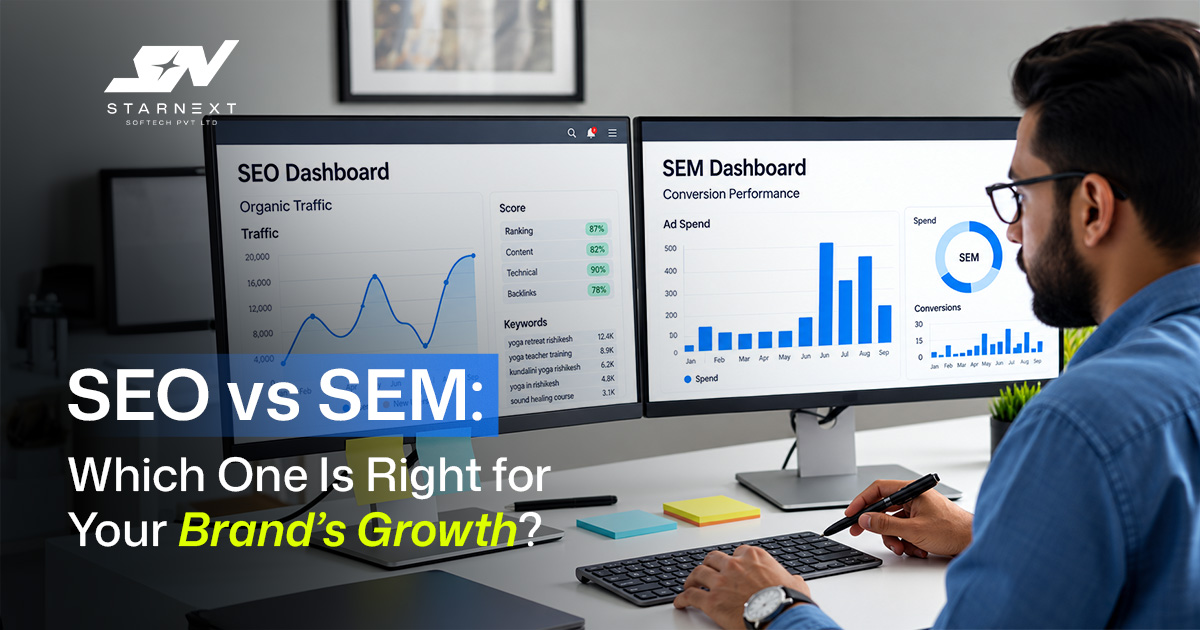
If you're trying to grow your brand online, there's a good chance you've come across two terms again and again: SEO and SEM. They sound similar. They both involve search engines. They both aim to bring people to your website. And, yes, both can help generate more leads, sales and brand visibility. So what's the real difference? More importantly, does your brand invest in SEO, SEM, or both? That depends on what you are trying to achieve. SEO is mainly about getting found through organic search results, while SEM is often used to describe search engine marketing that includes paid search advertising.
The distinction can be confusing because marketers sometimes use the terms differently. In this guide, we'll break down SEO vs SEM, look at their costs and benefits, and help you understand when each approach can fit into your brand's growth strategy.
What Is SEO?
Search Engine Optimization (SEO) is the practice of optimizing your website and content so that search engines can understand it and users can discover your business through organic search results. For example, imagine you run a skincare company. Someone searches for "Best moisturizer for dry skin." If your useful article, category page, or product page ranks for that search, the person can discover your brand without you paying for every click.
Common SEO activities include:
- Keyword research
- On-page optimization
- Technical SEO
- Content creation
- Internal linking
- Link building
- Local SEO
- Image optimization
- Mobile optimization
- Improving website speed
- Optimizing product and service pages
One of the biggest advantages of SEO is its potential to create long-term organic visibility. The downside is that SEO takes time. Publishing a blog post today does not mean it will immediately rank at the top of Google. SEO is more like planting a garden: you prepare the foundation, create useful content, keep optimizing it, and give it time to grow.
What Is SEM?
SEM (Search Engine Marketing) is a broad term for marketing efforts designed to increase visibility on search engines. In many modern marketing contexts, SEM is often used interchangeably with paid search advertising such as Google Ads.
For example, a business can pay to appear in sponsored search results when someone searches for a phrase such as "digital marketing agency near me." Unlike SEO, you don't have to wait for your website to organically climb search rankings. You can create an advertising campaign, select keywords, set a budget, write your ads, and potentially start generating traffic quickly.
SEM can include strategies such as:
- Pay-per-click (PPC) advertising
- Search ads
- Shopping ads
- Keyword bidding
- Remarketing
- Conversion-focused landing pages
- Audience targeting
- Ad extensions and assets
The biggest advantages of SEM are speed and control. The main drawback is that paid traffic generally requires continued advertising spend. When the campaign stops, the paid traffic associated with that campaign can stop as well.
SEO vs SEM: What's the Difference?
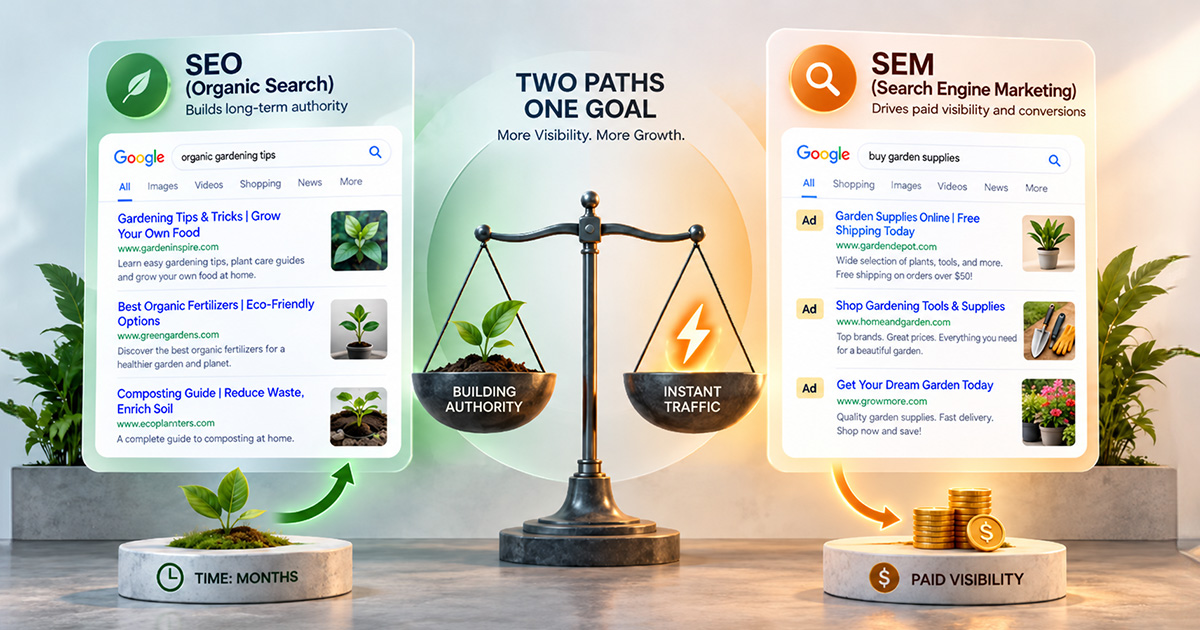
Here's the simplest way to look at it: SEO earns search visibility, while SEM, when referring to paid search marketing, buys search visibility. SEO focuses on improving organic rankings. SEM focuses on placing your business in front of searchers through paid campaigns.
| Factor | SEO | SEM |
|---|---|---|
| Main goal | Organic visibility | Paid search visibility |
| Speed | Slower | Faster |
| Cost model | Investment in optimization and content | Usually pay-per-click or campaign spend |
| Long-term value | High potential | Depends on continued investment |
| Control | Moderate | High |
| Traffic after spending stops | Organic traffic can continue | Paid traffic generally stops |
| Best use case | Sustainable organic growth | Immediate traffic and conversions |
| Testing | Usually slower | Usually faster |
Neither approach is automatically better. They are useful for different situations, goals, timelines, and acquisition strategies.
The Benefits of SEO for Brand Growth
1. SEO Builds Long-Term Visibility
Sustainability is one of the biggest reasons brands invest in SEO. Imagine creating a genuinely useful guide and ranking well for an important keyword. That page can potentially bring organic traffic month after month. As you create more useful content and optimize additional pages, your website can build a wider presence across relevant searches.
2. SEO Helps Build Trust
People recognize advertisements as advertisements. Organic search results can create a different experience. When your brand consistently appears for useful and relevant searches, it can build familiarity and authority with potential customers. This can be particularly valuable for businesses with longer buying journeys.
A potential customer might discover your brand through a blog post, read another article, compare your services or products, and eventually become a customer. SEO can support that journey by creating useful information at different stages of the buying process.
3. SEO Can Reduce Long-Term Dependence on Paid Traffic
Paid advertising can be highly useful, but depending entirely on paid traffic can increase acquisition costs. If you pay for every visitor, rising advertising costs can put pressure on your margins. SEO can diversify your traffic sources and potentially reduce dependence on paid acquisition over time.
The Benefits of SEM for Brand Growth
1. SEM Produces Faster Results
Speed is one of the biggest reasons businesses choose paid search. If you need traffic and leads quickly, SEM can provide visibility much faster than a new SEO campaign.
SEM can be particularly useful for:
- New product launches
- Seasonal offers
- Time-sensitive promotions
- New businesses
- Lead-generation campaigns
- Event registrations
- Competitive markets
You don't necessarily have to wait months to determine whether a paid campaign can attract visitors and generate measurable results.
2. SEM Offers Precise Targeting
Paid search allows you to control where and when your ads appear. Depending on your campaign setup, you can target specific keywords, locations, devices, audiences, and other signals. You can also adjust bids and budgets based on performance.
3. SEM Makes Testing Easier
Want to test two headlines, offers, landing pages, or keyword groups? Paid campaigns can provide performance data relatively quickly. You can use this information to understand what resonates with your audience.
SEM can also provide useful information for SEO. If a paid campaign shows that a particular keyword converts well, you may decide to create or improve an SEO-focused page around that topic.
SEO vs SEM: Which Is More Cost-Effective?
It's tempting to say SEO is cheaper because you don't pay for organic clicks, but that is an oversimplification. Effective SEO requires investment in strategy, content, technical improvements, SEO tools, developers, writers, designers, link acquisition, and ongoing optimization.
- SEO strategy
- Content creation
- Technical improvements
- SEO tools
- Development resources
- Writers
- Designers
- Link acquisition
- Ongoing optimization
SEM also involves costs beyond advertising spend, including campaign management, landing page development, creative work, and ongoing optimization.
The more useful question is not simply "Which one costs less?" but "Which one produces a better return for my business?" A paid campaign may generate valuable leads quickly, while a well-optimized SEO page can continue bringing qualified visitors over a longer period.
Instead of focusing only on clicks or rankings, businesses should evaluate metrics such as ROI, customer acquisition cost (CAC), conversion rate, customer lifetime value (CLV), leads, and revenue.
When Should Your Brand Choose SEO?
SEO should be an important part of your strategy if:
- You want sustainable organic traffic.
- Your customers regularly use search engines.
- Your industry has valuable informational searches.
- You have time to build long-term visibility.
- You want to establish topical authority.
- You want to reduce dependence on paid traffic.
- Your website has significant content opportunities.
SEO is especially useful for brands that want to build an audience and a lasting organic acquisition channel rather than relying only on one-time traffic.
When Should Your Brand Choose SEM?
SEM may be useful when:
- You need leads quickly.
- You're launching a new product or service.
- You have a strong conversion-focused landing page.
- You know your target audience.
- Your keywords have clear commercial intent.
- You want to test demand quickly.
- You have a measurable advertising budget.
For a new brand with limited organic visibility, paid search can provide an initial source of traffic while an SEO strategy gets underway.
Why You Probably Don't Have to Choose One
SEO and SEM can work together throughout the customer journey. Someone might first click a paid ad and visit your website without making a purchase. Later, they may search for your brand name, discover your organic content, read a comparison article, and return through another search before becoming a customer.
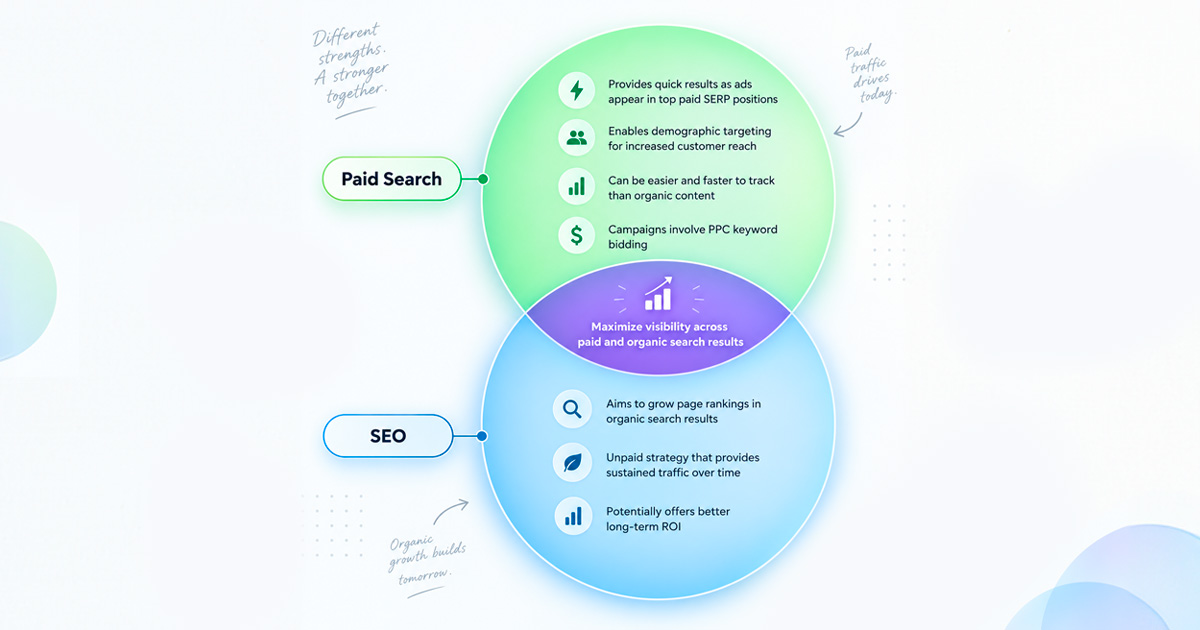
This is why SEO and SEM do not necessarily need to be treated as completely separate channels. SEM can provide visibility, testing, and targeted acquisition, while SEO can help establish authority, generate organic traffic, and build long-term search visibility.
How to Build an SEO and SEM Strategy That Works
Start with your goals. If lead generation is your immediate priority, paid search can help you collect meaningful campaign data while you identify which keywords are valuable for long-term organic visibility.
A practical approach is:
- Step 1: Research commercial and informational keywords.
- Step 2: Identify keywords with strong business potential.
- Step 3: Run targeted paid campaigns for high-intent terms.
- Step 4: Analyze which keywords and landing pages generate conversions.
- Step 5: Create or optimize SEO content around valuable search topics.
- Step 6: Improve conversion rates across both paid and organic landing pages.
- Step 7: Measure revenue, leads, CAC, and ROI.
This creates a feedback loop. SEM campaigns generate data, SEO strategies can use that data, and SEO content creates additional organic visibility. Together, both channels can contribute to a stronger overall search presence.
Final Thoughts: SEO vs SEM for Your Brand
SEO and SEM solve different parts of the search marketing challenge. SEM can provide paid visibility and traffic quickly, while SEO focuses on building organic visibility that can create value over the long term.
If your priority is immediate traffic and measurable short-term campaigns, paid search can play an important role. If your goal is sustainable organic visibility and long-term search growth, SEO can become a major acquisition channel.
For many brands, the two approaches can complement each other. Use SEM to capture demand and test opportunities today while investing in SEO to build an organic acquisition channel for tomorrow. The goal isn't simply to generate clicks. It is to become a useful and trusted answer that customers can discover throughout their buying journey.