10 Easy Ways to Increase Your Website Traffic Without Spending on Ads
If you own or manage a website, there's a question that probably pops into your head every single week: How do I actually get people to visit this thing? The easiest answer on paper is to just run ads. But if you've ever paid for clicks, you know how fast that budget vanishes and the minute you stop paying, the traffic stops dead in its tracks.
The good news is you don't need a fat marketing budget to get steady visitors. In fact, some of the best traffic sources come down to basic stuff: making your site easy to use, writing helpful things, and showing up where your audience hangs out. Whether you're running a small local business, an online shop, or just a personal blog, here are 10 straightforward ways to grow your traffic without spending money on ads.
1. Make Sure Your Site Works Well on Phones (and Loads Quickly)
Before you try to pull thousands of new people to your site, ask yourself: If someone lands here right now, will they stick around, or will they get frustrated and leave? Most people browse the web on their phones while doing three other things at once. If your text is tiny, buttons are impossible to tap, or a page takes six seconds to load, visitors won't wait around. They'll just hit the back button.
Grab your phone right now and click through your own site. Does it load fast? Are the pictures huge files that take forever to pop up? Is it easy to read?
- Shrink large image files before uploading them.
- Delete extra plugins or extras you don't actually use.
- Move to a better, faster web host if your current one is sluggish.
A fast, clean website keeps people on the page longer and gives search engines a clear reason to send more people your way.
2. Treat Social Media Like an Actual Conversation

Dropping links to your site on Twitter, LinkedIn, or Facebook and walking away doesn't really work anymore. Algorithms don't like it, and people usually scroll right past simple promo posts. Instead, use social platforms to actually talk to people. Find out where your ideal audience hangs out whether that's a specific subreddit, a Facebook group, or LinkedIn and just start being helpful.
Answer questions when people are confused about something in your field. Share quick tips without asking for anything in return. When you consistently offer good advice, people naturally click on your profile to see who you are.
3. Put Social Sharing Buttons Where People Can See Them
This is one of those simple fixes that a lot of site owners completely forget about. If you write a helpful guide or a great how-to piece, make it dead simple for readers to share it. Add clean, lightweight share buttons at the top or side of your blog posts so someone can send the link to a coworker or post it on social media with two clicks.
4. Go After "Long-Tail" Search Phrases
If you try to rank on Google for super broad words like "fitness," "marketing," or "shoes," you're competing against massive corporations with huge budgets. You'll get buried. Instead, focus on long-tail keywords which are just longer, much more specific search terms. Think "best road running shoes for wide feet" instead of just "running shoes."
5. Write Content That Actually Solves the Whole Problem
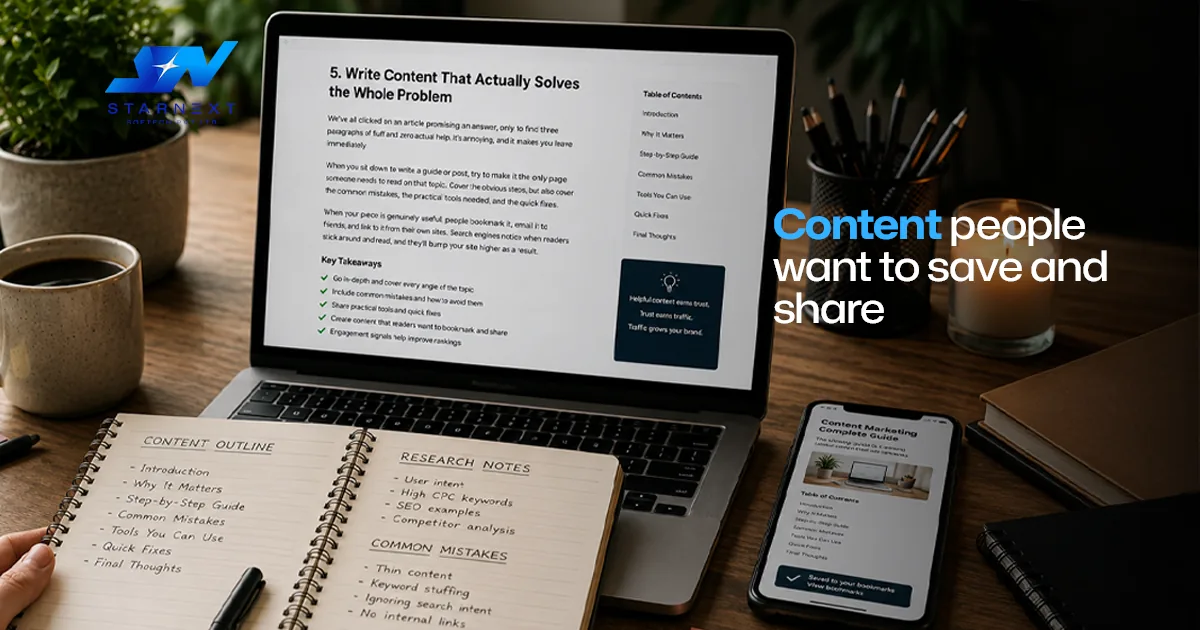
"When your piece is genuinely useful, people bookmark it, email it to friends, and link to it from their own sites."
We've all clicked on an article promising an answer, only to find three paragraphs of fluff and zero actual help. When you sit down to write a guide or post, try to make it the only page someone needs to read on that topic. Cover the obvious steps, but also cover the common mistakes, the practical tools needed, and the quick fixes.
6. Turn One Good Post into Five Other Things
- Turn the key steps into a short text post for LinkedIn.
- Take three main tips and turn them into a simple carousel graphic for Instagram.
- Record a 60-second video talking through the best tip for YouTube Shorts.
- Send a summary of the idea out in your email newsletter.
7. Write a Guest Article for Another Site in Your Industry
Writing for other blogs or online magazines is a classic way to reach a crowd that has no idea you exist yet. Look around for active sites, industry publications, or blogs in your space that accept outside contributors. Send the editor a short, friendly pitch with two or three realistic article ideas that their readers would actually care about.
8. Interview Interesting People in Your Space
Reach out to a few respected people in your field and ask them one specific question. Something like, "What's one piece of advice you wish you knew when starting out?" Combine their answers into a clean, well-formatted article and share it with them when live.
9. Partner Up with Niche Creators
Working with smaller micro-creators who have tight-knit, engaged followings often works way better than paying massive celebrities. Co-host a live Q&A, test out a product together, or work on a joint project to drive targeted traffic.
10. Keep Cleaning Up Your Old Pages
SEO isn't something you do once and check off your list forever. Every few months, pop into your analytics and see which articles used to get traffic but have started slipping. Update facts, fix broken links, swap low-res images, and refresh headings.