How to Grow Your Business Digitally in 2026: A Step-by-Step Guide
Digital marketing has been growing very fast during the last few years. 2026 is the dawn of a new age of artificial intelligence, with personalized customer experiences and AI-powered search engines changing the way businesses will connect with their audiences. In 2026, you won’t be able to grow your business digitally by relying on traditional marketing methods. Customers today expect a frictionless, personalized experience across a variety of digital channels. Brands are on Google AI Search, social media, voice assistants, and online communities - and they buy.
Companies need to transform digitally, use data-driven strategies, and adopt innovative technologies to be successful. Whether you’re a start-up, a local business, or a well-established business, investing in a future-proof digital marketing strategy will benefit you. It can increase conversion, allow long-term growth, generate qualified leads, and raise brand awareness. This article will discuss the best online business growth strategies in 2026, including SEO, AI marketing, AEO, GEO optimization, website optimization, branding, and engagement with customers.
Understanding Digital Business Growth in 2026
Growing a digital business is not having a website or social media presence. It’s about creating a perfect online experience that integrates all your marketing channels to engage, attract and retain customers. Digital Business Growth 2026 is about a handful of big trends. AI assistants give personalized recommendations and conversational search to help consumers find products and services. The companies that can read customer intent can deliver relevant experiences.
The days of the generic marketing campaign are over. The customers of today want to see content, product recommendations, and offers that are relevant to their interests and browsing behavior. AI Overviews, conversational search tools, and Google’s Search Generative Experience (SGE) are transforming the way that users find information. Besides the traditional search engines, companies need to optimize content for AI-based search engines. Customers interact with brands on websites, search engines, email, social media, messaging apps and marketplaces. A seamless omnichannel experience builds trust and increases customer retention.
Why Traditional Marketing Alone No Longer Works
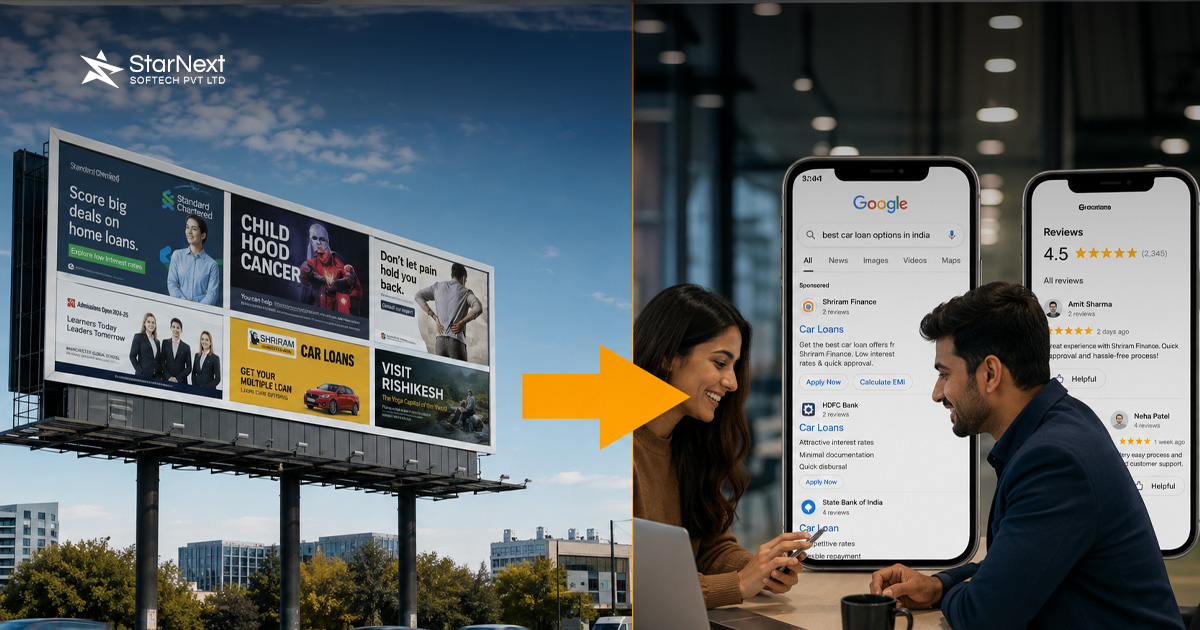
Print advertising, billboards, and TV still have their place in the marketing mix, but they can no longer be depended on to grow a business by themselves. Today’s customers do a lot of research before making purchase decisions. They compare products, read reviews, watch videos, and ask AI assistants for recommendations.
More and more consumers are turning to ChatGPT, Google AI Overviews, Bing Copilot, and Perplexity AI for the answers. Those companies that tune in to these platforms have better visibility. Your customers want to discover your business on Google, LinkedIn, Instagram, YouTube, Facebook, and industry-specific platforms. Credibility grows with visibility on different channels. Reviews, testimonials, case studies, secure websites, certifications, and active social profiles all hold a lot of weight in the purchasing decision.
Build a Strong Digital Brand
A recognizable brand helps businesses stand out in a crowded marketplace. Strong branding creates trust, improves customer loyalty, and supports long-term growth. Clearly communicate what makes your business different. Your unique value proposition should explain why customers should choose you over competitors. Use consistent colors, typography, logos, and imagery across your website, social media, email campaigns, and advertising. Whether your brand is professional, friendly, or innovative, maintain a consistent tone in all communications. Encourage customer reviews, respond to feedback promptly, and showcase testimonials and success stories. Positive reviews improve both customer trust and local search visibility.
Create a High-Converting Website
Your website serves as the foundation of your digital marketing strategy. Even the best advertising campaigns will struggle if visitors encounter a slow or confusing website. With most users browsing on smartphones, your website should provide an excellent mobile experience. Website speed directly impacts user experience, SEO rankings, and conversion rates. Compress images, optimize code, and use reliable hosting to improve performance.
A clean layout, intuitive navigation, and clear calls-to-action help visitors find information quickly and encourage conversions. Effective websites include clear headlines, strong value propositions, trust badges, customer testimonials, simple contact forms, and prominent CTA buttons. Even small improvements in user experience can significantly increase lead generation and sales.
SEO Strategies That Work in 2026
Search engine optimization remains one of the highest-ROI marketing channels. However, SEO in 2026 focuses on providing helpful, authoritative, and comprehensive content rather than simply targeting keywords. Ensure your website is easy for search engines to crawl and index by optimizing site speed, mobile usability, HTTPS security, XML sitemaps, structured data, and core web vitals. Optimize title tags, headings, meta descriptions, and internal links, and naturally include relevant keywords throughout your content.
Search engines now understand relationships between topics. Rather than creating isolated articles, develop content clusters that comprehensively cover related subjects. Publishing in-depth, interconnected content establishes your business as an authority in your niche and improves rankings for competitive keywords. Google rewards content demonstrating experience, expertise, authoritativeness, and trustworthiness. Include expert insights, case studies, original research, and credible sources to strengthen your content.
AEO (Answer Engine Optimization)
As AI assistants become primary sources of information, businesses need to optimize content for answer engines rather than traditional search alone. Create content that directly answers common customer questions using clear headings and concise explanations. Use bullet points, numbered lists, and short definitions to improve your chances of appearing in featured snippets. Schema markup helps search engines better understand your content and improves eligibility for rich search results. People increasingly search using natural language, especially through voice assistants. Write content that mirrors how people ask questions. AEO improves visibility across Google AI Search, voice assistants, and AI-generated answers.
GEO (Generative Engine Optimization)
One of the biggest shifts in digital marketing is the rise of Generative Engine Optimization (GEO). Unlike traditional SEO, GEO focuses on making your content discoverable and citable by AI-powered platforms. Businesses should optimize content for ChatGPT, Google AI Overviews, Bing Copilot, Perplexity AI, and other generative search engines. Effective GEO strategies include publishing original, high-quality content; supporting claims with reliable sources; building strong topical authority; using clear headings and logical structure; strengthening entity SEO through consistent brand information; and creating content that AI systems can easily summarize and cite. As AI-powered search continues to grow, GEO will become an essential component of every successful digital marketing strategy.
Local SEO for Business Growth
If your business serves a particular city or region, Local SEO in 2026 is still one of the best ways to attract customers nearby. Mobile searches and “near me” queries are growing, so optimizing for local search helps you reach people who are actively looking for your products or services. Optimize your Google Business Profile with correct business information, business hours, and high-quality photos. Maintain consistent local citations on review sites and directories. Encourage customer reviews and answer them professionally to establish trust. Create location-specific content for your service areas. Optimize for Google Maps using relevant local keywords and consistent business information. A strong local presence helps you get more visibility, build trust in your business, and drive quality traffic to your business.
Develop a Content Marketing Strategy
Content is one of the most valuable assets for digital growth. Good quality, informative content is a great way to attract organic traffic and establish authority, as well as nurture potential customers through the buying process. Write in-depth guides on fundamental subjects related to your business. These will be the basis of the content structure of your website. Support pillar pages with related blog posts answering specific customer questions. Internal linking between these pages is good for SEO and for the user experience. Write articles that are evergreen so you don’t have to keep updating them and can get long-term traffic.
Different audiences consume content differently. Mix blog posts with video, infographics, interactive quizzes, downloadable assets, and case studies. A diverse content strategy increases engagement and improves the chances of connecting with customers across multiple channels.
Leverage AI-Powered Marketing
Artificial intelligence is changing the way businesses strategise and execute marketing campaigns. AI improves productivity by automating repetitive tasks and offering data-driven insights rather than replacing marketers. Some of the highest-value applications of AI are AI content creation for blogs, email, and social media posts, AI personalization for personalized recommendations & offers, predictive analytics for forecasting customer behavior, AI chatbots that provide instant customer support and qualified leads, and marketing analytics to identify trends and improve campaigns. The combination of AI tools and human imagination allows businesses to operate more efficiently and to provide more relevant customer experiences.
Social Media Marketing in 2026
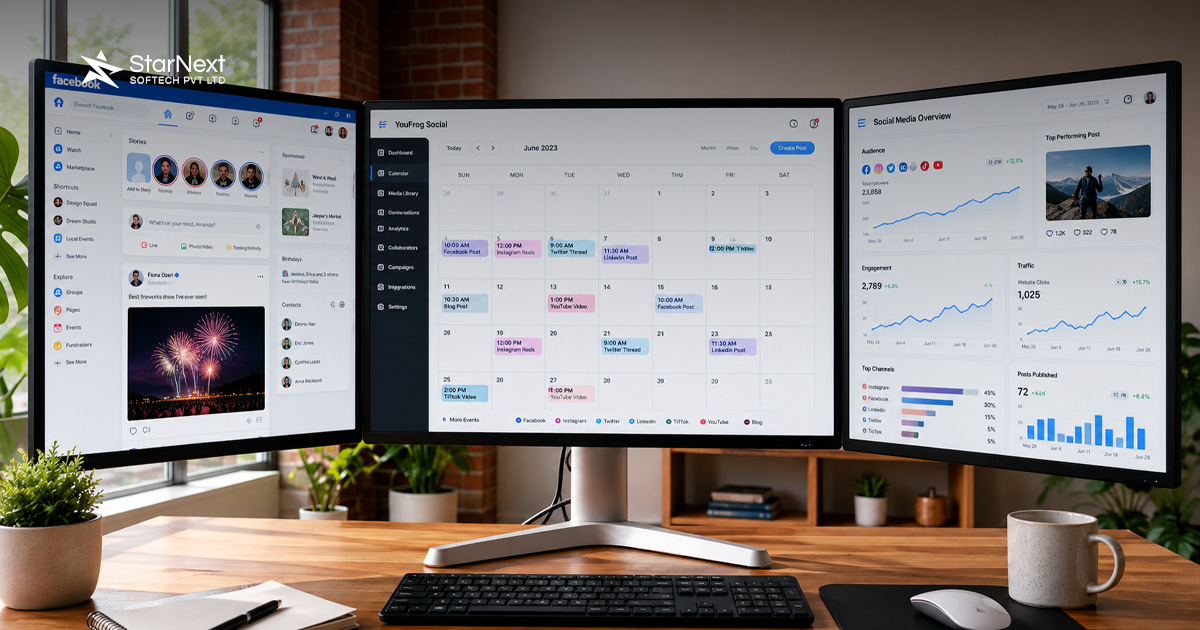
Social media has now become a full-fledged platform for getting and engaging customers. Simply posting regularly isn’t enough to find success; you need to take a more strategic approach that’s tailored to each platform.
Here are some strategies for particular platforms:
- Instagram: Prioritize reels, stories, and user-generated content to increase engagement.
- LinkedIn: Share thought leadership and industry insights to connect with B2B audiences.
- Facebook: Create communities with groups and targeted ads.
- YouTube: Create educational videos, tutorials, and product demos.
- TikTok: Make real short videos that are on point with current trends.
- Threads and X: Engage in industry conversations and post timely updates.
Building an active community around your brand results in loyal customers and helps your business grow in the long run.
Invest in Video Marketing
Video is still king when it comes to consuming digital content. It catches the eye quickly, makes complex ideas easier to understand, and increases engagement on websites and social media. A good video strategy should include social media short-form videos, educational tutorials, product demos, client testimonials, live event broadcasts, and BTS content. Video helps with SEO not only by improving engagement but also by improving user experience and time spent on your website.
Automate Email Marketing
Email marketing is still one of the most cost-effective digital marketing channels. Automation enables a business to send timely and personalized messages without manual effort. Successful email campaigns include a series of welcome emails, lead nurturing sequences, abandoned cart reminders, product suggestions, re-engagement campaigns, and requests for customer feedback. By connecting your email platform to a CRM, every customer interaction can contribute to crafting a more personalized experience.
Streamline Marketing Automation
Marketing automation helps organizations grow their business while providing personalized messaging. Automation can make lead scoring, customer segmentation, management of workflows, moving through the sales funnel, CRM updates, and follow-up reminders easier. Automation of routine tasks allows marketing teams to focus on strategy, creativity, and relationship building.
Use Paid Advertising Strategically
Organic marketing is great to get you long-term visibility, but if you do it right, paid advertising can give you instant results. Successful Performance Marketing strategies include Google search ads, performance max campaigns, ads on Meta, ads on LinkedIn, and retargeting campaigns. Don't just optimize for clicks; optimize for the bottom line, such as qualified leads, sales, and lifetime customer value.
Optimize for Higher Conversion Rates (CRO)
Getting traffic is half the battle won. Conversion Rate Optimization (CRO) helps turn more of your visitors into customers. Increase conversion rates by targeted landing page development, how to write effective Calls to Action (CTAs), A/B testing, how to use heatmaps to understand visitor behavior, streamlining forms and checkout processes, and reducing how long pages take to load. A small improvement in user experience can often translate into large gains in revenue without spending more on advertising.
Measure Success with Data Analytics
Data-driven decision-making is the base of sustainable growth. Watch for these key performance indicators: website visitors, organic keyword rankings, conversion ratio, cost per acquisition, customer lifetime value, and return on investment (ROI). You can also use tools such as Google Analytics, Google Search Console, or CRM reporting platforms to gain insight into what the campaign is doing and what customers are doing. As they review these metrics on an ongoing basis, businesses can identify improvement areas and better allocate marketing budgets.
Focus on Customer Retention
Getting new customers is important, but it usually costs less to keep old ones. Drive customer retention by launching loyalty schemes, delivering a personalized experience, collecting and responding to customer feedback, creating content just for existing customers, and creating online communities. Repeat buyers and brand advocates are made from satisfied customers and contribute to long-term business growth.
Common Mistakes Businesses Should Avoid
The problem is that many businesses don’t grow digitally because they ignore the basics. Common pitfalls to avoid include AI-powered search trend tracking, a slow and dated website, branding not consistent across channels, publishing inconsistent or low-quality content, no SEO, local optimization, not automating repetitive marketing tasks, and decisions without analysis of data. Catching and correcting these problems early can make a huge difference in your digital marketing results.
Future Trends Beyond 2026
Digital marketing will keep on growing fast. The companies that focus on innovation are more likely to be successful over the long term. The future trends will be AI-powered commerce, visual search technology, voice-optimized shopping, AR shopping experiences, personalized hyper-marketing campaigns, and customer predictive experience. Those that start preparing for these developments now will be better positioned competitively in an AI- and AI-driven increasing market.
Final Thoughts
In 2026, digital transformation requires more than the latest technology. For your business to grow successfully, you need a comprehensive, customer-centric strategy. This is what happens when you put SEO, AI marketing, content creation, automation, social media, paid advertising, and data analytics all together in one digital ecosystem. User-focused companies that create content that has real value, are optimized for AI-powered search, and use automation will be well-positioned to thrive in the years ahead. Technology is certainly transforming digital marketing. But there’s still no substitute for real relationships, trust, and the delivery of consistent value if you want to build sustainable growth.