Marketing Automation Is Growing Up: What Businesses Need to Build
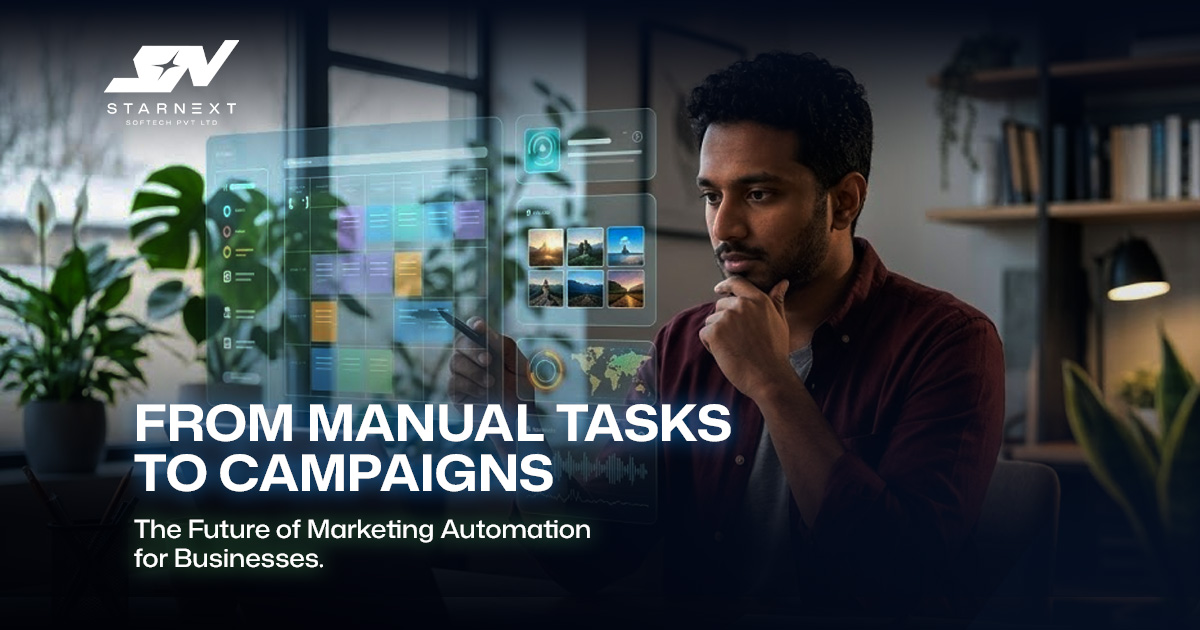
A good lead does not usually disappear because a business lacks ambition. It disappeared because nobody followed up while the inquiry was still fresh. The right information sat in a spreadsheet or the next step depended on one person remembering it. That is the problem Marketing Automation is meant to solve, not the vague promise of "doing more with less."
The shift now is more significant than scheduled emails. Businesses are connecting website activity, CRM data, advertising audiences, sales conversations and customer service signals to make campaigns more timely and relevant. Used carefully, automation protects the parts of marketing: judgment, empathy, creativity and the conversations that actually close business.
What Marketing Automation Actually Means in Day-to-Day Work
For anyone asking what digital marketing automation is, the useful answer is simple: it is a system that performs marketing actions when a customer signal or business rule calls for them. The action might be an email, a task for a salesperson, an audience update for an ad campaign, a text reminder or a change in the content shown on a website.
The trigger matters more than the channel. A home-services company for example can send a maintenance reminder six months after a completed installation. A B2B consultant can alert a salesperson when a prospect returns to the pricing page in a week. Neither sequence needs a marketer to watch the clock. Both should feel sensible to the person receiving it.
The strongest systems bring four things together: customer data, clear journey logic, useful content and a way to learn from results. Software can execute the workflow. It cannot decide what a customer genuinely needs unless the business has done the strategic work first.
The Change: From Batch Campaigns to Responsive Journeys
Previously automation often meant a monthly newsletter and a fixed five-email drip sequence. That was an improvement on sending but it treated every subscriber as if they were in the same moment of the buying process. Modern digital marketing automation responds to signals instead: a demo request, a repeat product view, a quote, a recent purchase or a customer-support interaction.
This does not require an "always-on" machine on day one. A local clinic might begin with appointment confirmations, -visit instructions and a post-visit feedback request. A retailer may start with abandoned-cart messages and replenishment reminders. Each workflow is modest. It removes friction at a moment when the customer is already engaged.
Why Smart Campaigns Beat Campaigns
The temptation is to automate every possible message. That usually creates a brand, not a better one. Smart campaigns earn their place because they answer a known customer need that arrives at a time and lead to a clear next action.
A gym for instance should not send the promotion to a person who attended a trial class yesterday and a former member who left a year ago. Their context is different. One may need a nudge to join; the other may need a reintroduction that acknowledges the gap. Segmentation is not a technical setting. It is the difference between being useful and being ignored.
Where Automation Delivers Real Business Value
- Faster first responses: New leads receive an acknowledgment and the next step while intent is still high; the sales team receives the enquiry with context rather than a bare contact record.
- More Consistent nurturing: Prospects who are not ready to buy can receive relevant case studies, guides or reminders over time instead of being forgotten after one call.
- Better handoffs between teams: A salesperson can see what a prospect downloaded, which pages they viewed and whether they attended a webinar before beginning a conversation.
- Stronger Retention work: Purchase follow-ups, onboarding, renewal reminders, education and reactivation can be planned as carefully as lead generation.
These benefits depend on restraint. A customer should never receive three automated prompts from three departments because the systems were not coordinated. Frequency caps, suppression rules and a shared contact record are as important as triggers.
The Capabilities That Matter in Marketing Automation Tools
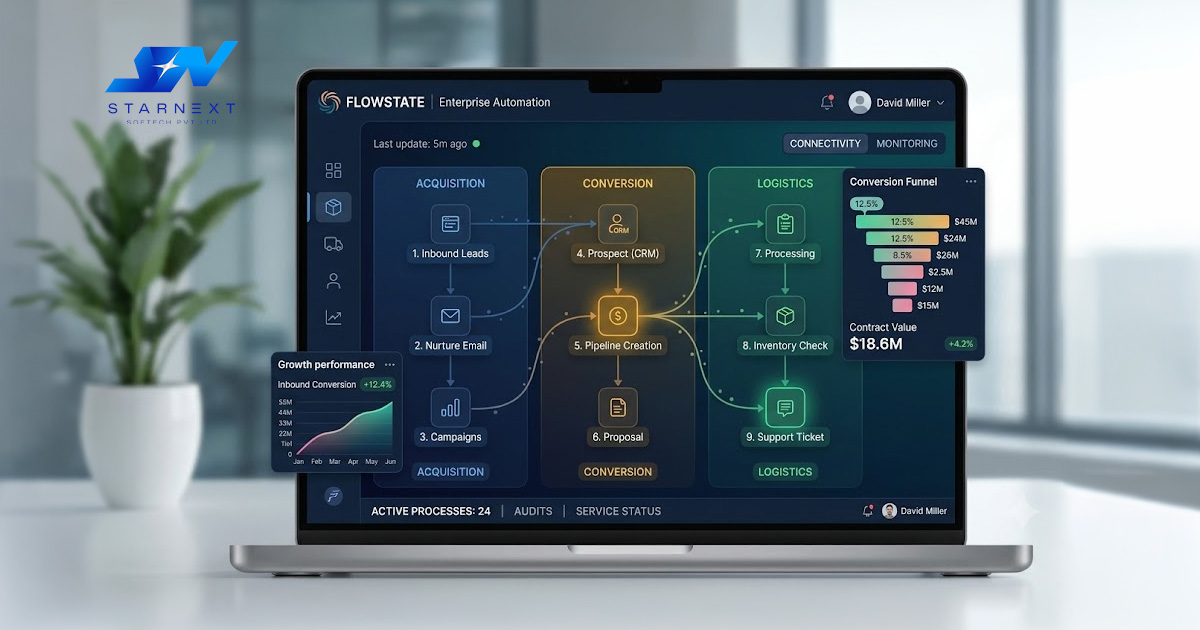
There is no best platform. The right choice depends on your sales cycle, existing technology, data maturity and the time your team can realistically give to setup. When comparing marketing automation tools, judge them against the work you need done next, not against a feature checklist.
Start With Data and Integration
Your platform should connect reliably with the CRM, website forms, analytics, e-commerce system and advertising channels that matter to your business. Duplicate contacts, missing consent records and disconnected data make personalization unreliable. Fixing these issues after launch is expensive because flawed logic has already spread through campaigns.
Look for Flexible Journey Building
A visual workflow builder is helpful. Its real value is the ability to handle genuine choices. Can it pause when a lead books a meeting? Can it stop messages after a purchase? Can it route a high-value enquiry to a person? Those are the questions that reveal whether a platform supports the customer journey or merely sends emails.
Measure Revenue, Not Activity
Open rates and clicks can help diagnose a campaign but they are not the business outcome. Track qualified leads, meetings booked, conversion by lifecycle stage repeat purchases, churn and revenue where your data allows it. A smaller campaign that creates sales conversations is more valuable than a campaign that generates superficial engagement.
A Practical First 90 Days
The best implementation is usually less dramatic than vendors suggest. Build one workflow, learn from it then expand. This sequence avoids buying complexity before the team has a process to automate.
- 1. Customer journey mapping: Choose a path that has a start and an end – for example, web inquiry to sales call, first purchase to repeat purchase, or event registration to follow-up.
- 2. Audit the data required for that trip: Ensure required fields, consent status, ownership rules and source tracking are implemented.
- 3. Write the messages before building the workflow: Decide what the recipient needs at each moment; do not let available software features dictate the communication.
- 4. Build Guardrails: Include exit criteria, frequency limits, internal alerts, and manual review points for high-value situations.
- 5. Test scenarios: Run through paths including incomplete forms, repeat contacts, cancellations and purchases.
- 6.Review after launch: Check both performance data and customer feedback. A workflow can be technically correct and still feel intrusive.
Where AI Helps—and Where It Still Needs Oversight
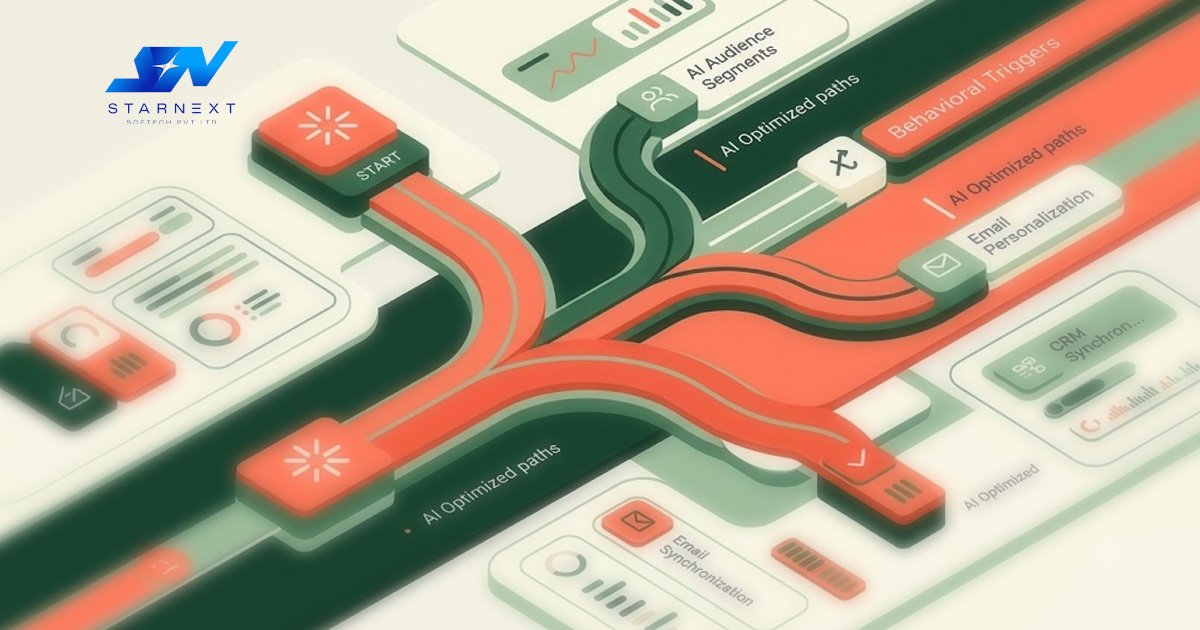
AI is changing automation from a rule-based system into an adaptive one. It can help teams summarize audience behavior, suggest content variants, identify patterns in engagement, draft first-pass messages and prioritize work. That can save time for small teams managing several channels.
Prediction is not permission. An AI model may identify an audience that's likely to respond; it does not know whether the message is appropriate, whether the data is complete or whether a claim is accurate. Marketers should review customer-facing copy protection data and maintain clear human accountability for campaign decisions.
The credible future is not an unattended marketing department. It is a team using automation to notice more responses sooner and spend less time on clerical work.
Mistakes That Make Automation Feel Cold
- Automating a process: If qualification sales ownership or customer service is unclear offline the software will only reproduce the confusion faster.
- Using one journey for everyone: Basic demographic segmentation is rarely enough; behavior, lifecycle stage and expressed interest should shape communication.
- Treating every click as buying intent: A visitor may be researching, comparing or simply returning to find an invoice. Escalate based on a pattern, not a weak signal.
- Writing messages around the business calendar: Customers do not care that it is quarter-end. Contact them because there is a reason for the message.
- Leaving workflows untouched :Offers expire, product details change and customer expectations move. Assign an owner to review automations regularly.
What the Future Looks Like, for Businesses
The next stage of Marketing Automation is less about adding channels and more about joining them. Customers will move between search, social, websites, messaging, email, physical locations and sales calls without seeing those as experiences. Businesses that maintain data and clear messaging will be better placed to respond coherently across that journey.
Expect AI-assisted analysis and content production but also more pressure to prove relevance. Privacy expectations, consent requirements and diminishing third-party data make first-party information more valuable. That favors businesses that earn customer trust through interactions rather than collecting data simply because they can.
Final Perspective: Build a Better System, Not a Bigger Megaphone
Businesses do not need automation because they want to send messages. They need it because customers should not lose momentum while teams chase spreadsheets, forward enquiries or rely on memory for routine follow-up. The strongest automation feels almost invisible: it gets the information to the right person at a useful moment then leaves room for a real conversation.
Start with one journey your customers already experience. Make its data accurate, its messages helpful and its handoff to people clear. Once that works, Marketing Automation becomes more than a software purchase it becomes a way to run better marketing.