Why Businesses Are Switching to Next.js for Faster and SEO-Friendly Websites
A website does more than frustrate visitors. It quietly weakens every marketing effort behind it. Paid ads bring people to the site. They leave before the page becomes useful. SEO brings impressions, yet poor loading and unclear content stop those impressions from becoming enquiries. This is why many businesses now ask a practical question: "Will our website load quickly rank well and keep working as we grow?”
For companies that need a content‑rich, scalable and search‑friendly website, Next.js Website Development has become a strong option. Next.js Website Development is a React‑based framework that helps developers build flexible websites while making it easier to serve content in a way search engines can understand.
The appeal is not that Next.js is new or fashionable. Its value comes from what it solves: slow pages, SEO setups, poor mobile experiences and websites that become harder to manage as a business adds services, products, locations or content.
What Is Next.js and Why Businesses Care
Next.js Website Development is a framework for building websites and web applications using React. React helps developers create interfaces while Next.js Website Development adds the structure needed to build a complete production‑ready website.
For a business owner the technical details matter less than the outcome. A well‑built Next.js Website Development can load quickly meaningful content to search engines that remain manageable as the business grows and support service pages, blogs, product catalogues, booking systems, forms and customer portals.
This is why Next.js for Fast Websites has become more than a developer preference. It is now a business decision for companies that depend on search, paid campaigns, local visibility and repeat customer engagement.
A clinic may need treatment pages, doctor profiles, location details, FAQs and appointment enquiries. An eCommerce brand may need product pages, filters, inventory updates and secure checkout. Next.js Website Development can support these needs within one website than forcing the business into a rigid template.
The Real Problem : Slow Websites Lose Attention
Many websites are built as client‑side applications. When someone opens such a page the browser may first receive a shell. It then downloads JavaScript, runs it and finally displays the content.
That approach can work for dashboards or applications where search visibility is not important. It becomes a problem when a business relies on Google to bring in customers.
Some search engine crawlers may not execute JavaScript, which means they could see a loading state rather than the finished page. Users on mobile connections face a similar issue.
Consider a clinic with a beautifully designed website. If treatment information appears after several scripts load, a patient searching for "dental implants, near me" may leave before seeing anything useful. The clinic loses the enquiry even though its service, reputation and content may be excellent.
Why Businesses Are Choosing Next.js
The Benefits of Next.js for Business Websites become clearer when a company needs more than a five-page brochure site. Businesses pick Next.js when they need fast load times, search visibility, flexible content and space to grow.
| BUSINESS NEED | HOW Next.js HELPS |
|---|---|
| Faster page delivery | Pages can be pre-rendered and delivered through a CDN, reducing work on every visit. |
| Better search visibility | Static and server-rendered pages can provide HTML and metadata before JavaScript runs. |
| Scalable content | Blogs, service pages, product listings, and location pages can be added without rebuilding the site. |
| Better user experience | Image, font, caching, and prefetching features reduce common performance problems. |
| Flexible functionality | A site can combine static content, dynamic data, and interactive components where needed. |
A restaurant can use pages for its menu, location and reservation details while its booking system uses interactive client‑side features. A real‑estate business may need server‑rendered listings that change often. Next.js lets both methods work side by side.
How Next.js Improves Website Speed
Speed matters more than a simple score. It decides if a visitor stays, reads the page, submits a form, calls the business or adds a product to a cart.
Pre-rendering Makes Content Available
Next.js pre‑renders pages by default. This means it can create HTML before a visitor requests a page waiting for the browser‑side JavaScript.
- Static Site Generation (SSG): Next.js creates HTML during the build. Reuses it for each request. This works well for service pages, blogs, about pages, FAQs and other content that does not change every second.
- Server‑Side Rendering (SSR): Next.js creates HTML for each request. This suits pages that need data, such as inventory, pricing, personalised content or listings that change often.
For SEO- Website Development, The rule is simple: important content and metadata must be ready when the page loads, without JavaScript. Next.js shows that SSG and SSR are the ways to achieve this.
Image Optimisation Reduces Common Delays
Images often cause problems than developers think. Large files, dimensions and unexpected layout shifts can make a pretty site feel unstable.
Next.js has an Image component that automatically serves the size using modern formats like WebP and AVIF loads images lazily and stops layout shifts.
For an eCommerce store this matters a lot. A product page with high‑resolution images can stay rich while loading fast on mobile. For a salon, clinic or retail shop new photos can still look great without slowing every page.
Caching and Prefetching Improve Repeat Visits
Next.js supports caching for rendered results, static files and data requests. It also prefetches links to prepare the pages before a visitor clicks.
The benefit goes beyond the homepage. A visitor who lands on a service page and then goes to pricing, testimonials or a contact page sees navigation. Every delay gives a chance for hesitation.
Next.js SEO Optimization: What Actually Helps
Next.js does not promise rankings. No framework can. It removes technical barriers that stop good content from being understood, indexed and recommended.
A fast framework cannot fix content, unclear services or a bad site structure. It can however give content a stronger technical base.
Metadata Becomes Easier to Manage
Page titles, meta descriptions, Open Graph details, canonical tags and social‑sharing info help search engines and users know what each page is about. Next.js offers a Metadata API for titles, descriptions, Open Graph images, sitemaps and robots files.
This is especially useful for businesses with pages. A law firm may have pages for family law, property disputes, corporate advisory and local office locations. Each page needs its title, description, headings and internal links, not one generic template repeated across the site.
Clean URLs and Internal Links Support Discovery
URL structure, headings and internal links show how search engines see a website’s hierarchy. Next.js gives guidance on these SEO basics along with its rendering features.
- URL structure • Headings • linking
- /services/website-development/
- /services/seo/
- /blog/nextjs-website-development-seo-benefits/
- /contact/
Clear URLs help users see where they are and help search engines see how pages relate. They also make it easier to track analytics, campaigns and plan content.
Core Web Vitals Become Part of the Build Process
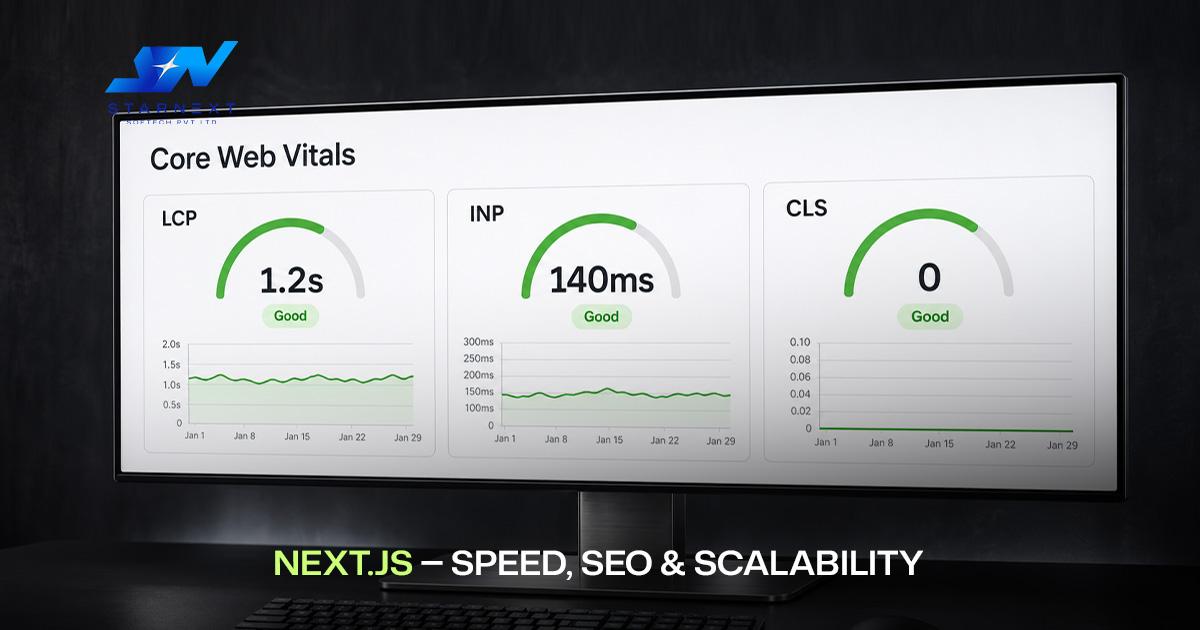
Next.js includes optimization tools that aim to improve Core Web Vitals. These tools handle images, load fonts, cache data and cut down on client‑side JavaScript using Server Components.
That does not mean a Next.js site always runs fast. A developer can still make a website if they use big videos, extra third‑party scripts, bad hosting or a heavy design.
Where Next.js Fits in SEO
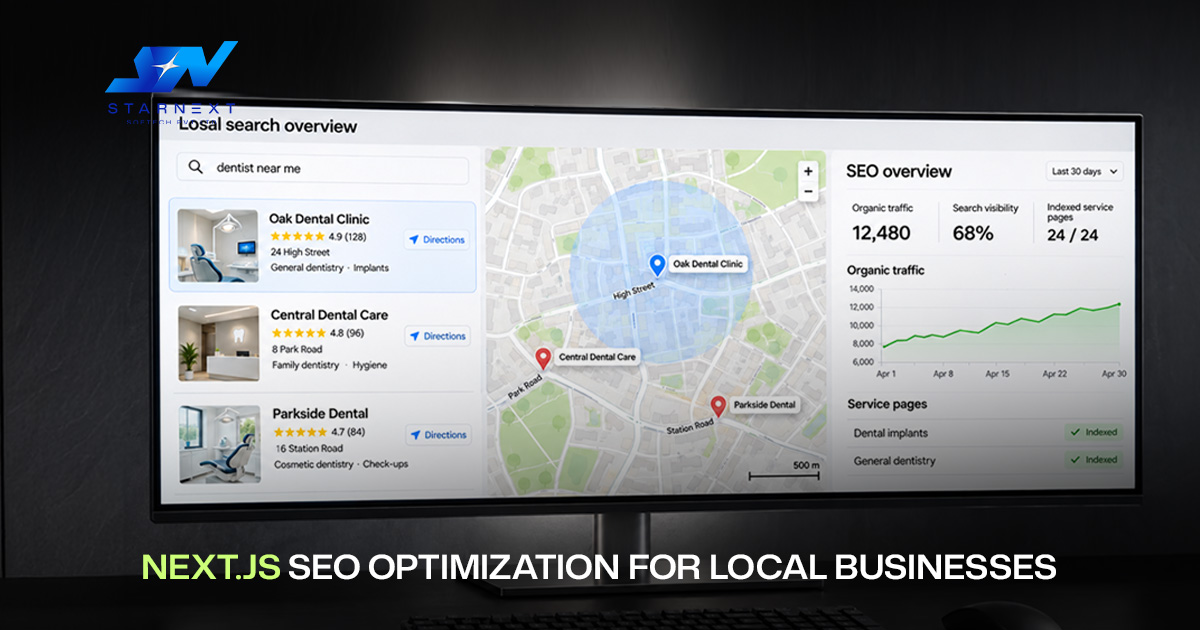
Next.js SEO Optimization is especially useful for local businesses that rely on both their website and Google Business Profile.
A local SEO plan usually needs more than a homepage. A dental clinic might need pages for treatments, location details, doctor profiles, FAQs, testimonials and blog posts. A home‑services company might need pages for plumbing, electrical work, AC repair and each service area.
Next.js makes it easier to build and keep these pages when you need many of them. Static generation can serve service and location pages while server rendering can help pages that need up‑to‑date availability, prices or inventory.
The website should also repeat the information shown on Google Business Profile: business name, address, phone number, service areas, opening hours, reviews and service descriptions. Keeping the entity information on the website Google Business Profile and trusted local citations helps users and search engines see exactly what the business offers and where it is located.
Common Next.js Mistakes to Avoid
- Using client-side rendering for SEO pages: If core service, product or location content loads through JavaScript search visibility can suffer.
- Ignoring content quality: Fast code cannot fix pages repeated service descriptions or content that does not answer customer questions.
- Overusing third‑party scripts: Chat widgets, trackers, pop‑ups and marketing tags can slow down a site.
- Treating images as an afterthought: Large unoptimised images often cause pages and layout shifts.
- Launching without measurement: Businesses should track traffic, indexed pages, conversions, Core Web Vitals data and enquiry quality after launch.
- Choosing Next.js for every project: A simple one‑page business site may not need an application framework. The decision should follow business needs, not trends.
How AI Search Changes the Requirement
AI-driven search experiences like AI Overviews make clarity and consistency more important. Of just scanning keywords these systems need to understand a business, its services, its expertise and how pages relate.
A Next.js website can help by giving HTML, accurate metadata organized internal links, clear headings and consistent business information. It cannot replace expertise content or a credible brand but it gives that content a stronger technical base.
For a business the real question is not just "Can Google find my homepage?" but "Can a search engine and an AI answer understand my services, location, credibility and the right customer?”
Is Next.js the Right Choice for Your Business?
Next.js Website Development is a fit when a business needs a content‑rich site, plans to grow, wants better organic visibility or is rebuilding a slow React‑based platform.
- Service businesses that need location and service pages.
- eCommerce brands with catalogues and frequent product updates.
- Blogs that rely on organic traffic.
- SaaS companies that need marketing pages along with a product application.
- Businesses replacing a hard‑to‑maintain website.
It may not be needed for a small static site with limited growth plans. For companies that treat their website as a growth channel Next.js gives a sensible balance of speed, flexibility and SEO readiness.
Final Thoughts
Businesses are switching to Next.js because they want websites that do more than look good. Businesses need pages that load quickly, communicate clearly with search engines, scale with content and turn attention into enquiries or sales.
The real advantage of Next.js for Fast Websites is control. A business can serve content statically, render dynamic pages when needed, optimize images and fonts and maintain strong technical SEO without sacrificing user experience.
For companies planning a redesign the goal should not be "use Next.js because competitors do." The goal should be to build a website that supports growth: faster experiences, clearer search visibility, better content architecture and a smoother path from discovery to conversion.